
Artificial Nesting Hollows
Extensive land clearing over the past two centuries has dramatically reduced the availability of suitable habitat for Western Australia’s Black Cockatoos. Today, only a small proportion of the original woodland and forest ecosystems that once supported these species remain.
Habitat loss and fragmentation have reduced both foraging resources and breeding opportunities, making it increasingly difficult for Black Cockatoos to locate suitable nesting hollows within range of reliable food sources. Mature eucalypt trees large enough to develop natural hollows can take more than 150 years to form, and Black Cockatoos require some of the largest hollows available in the landscape.
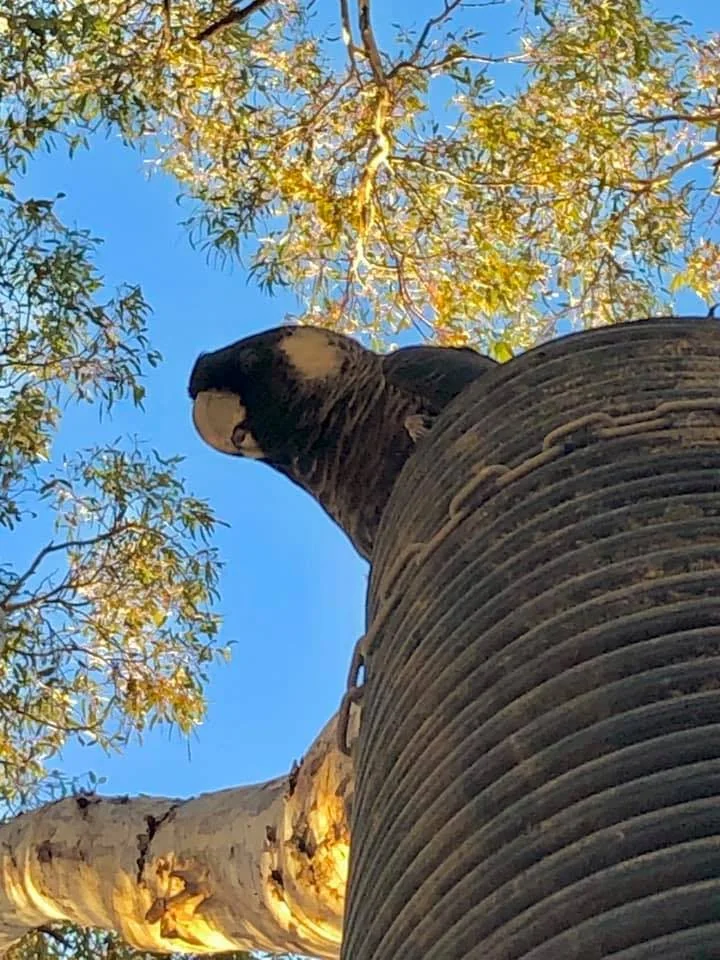
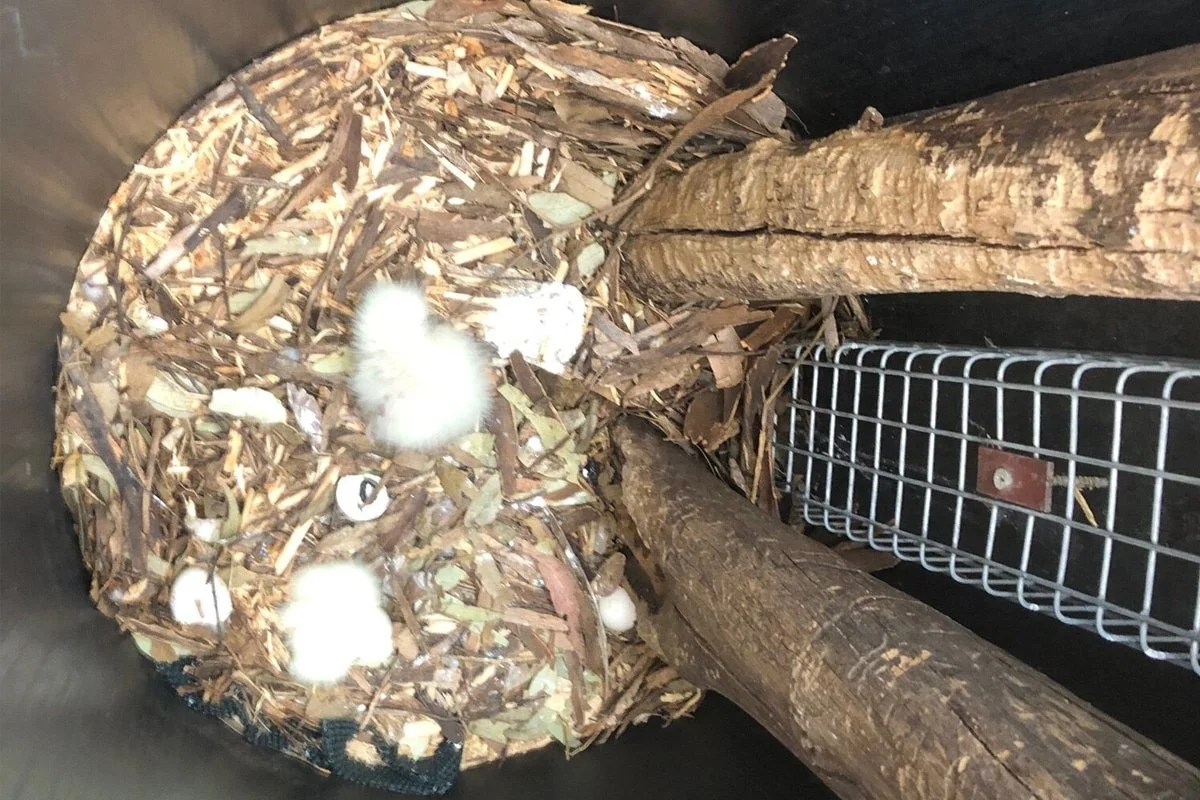
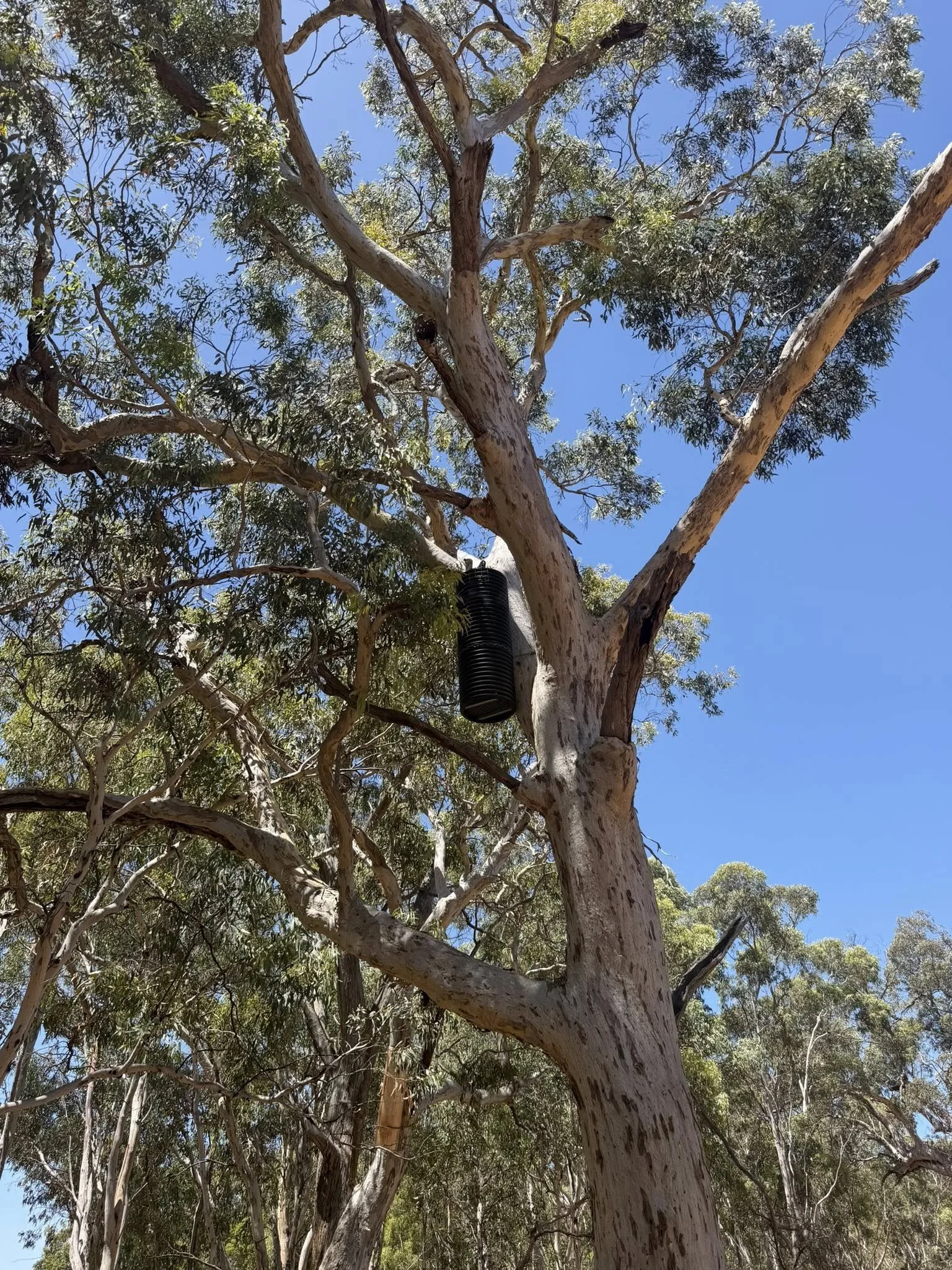
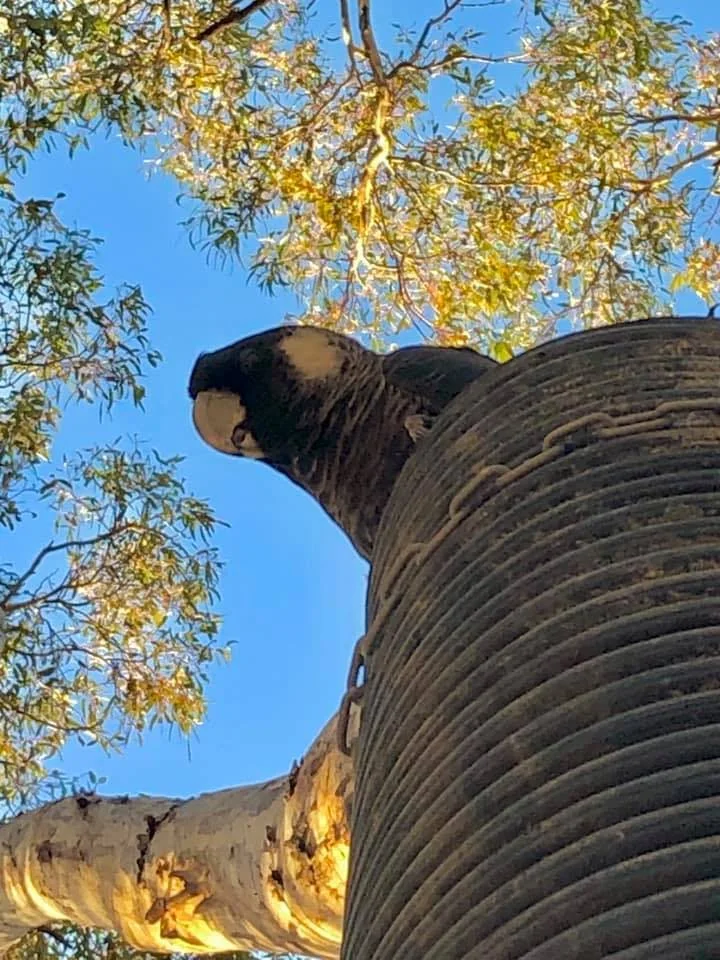
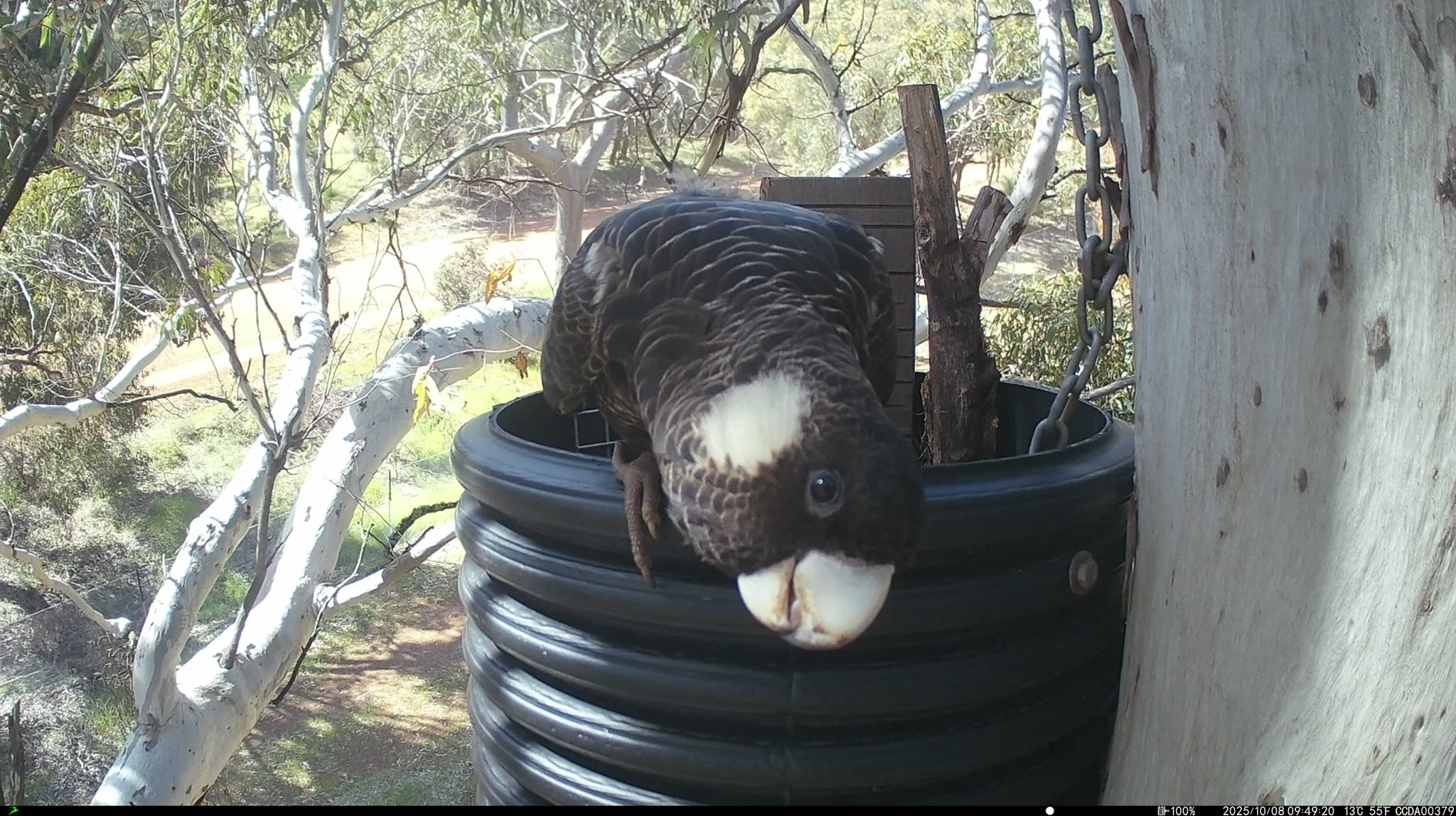
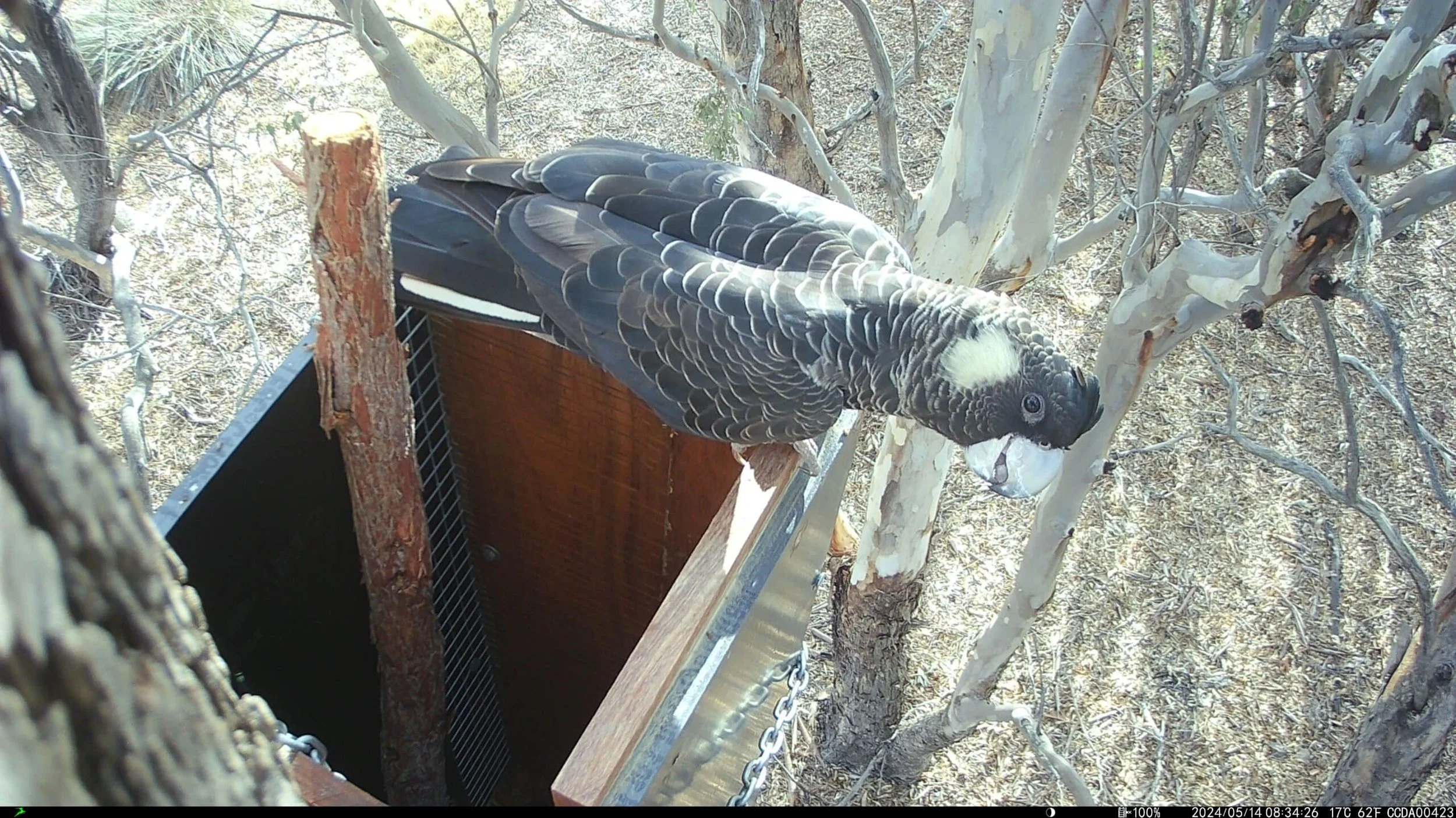
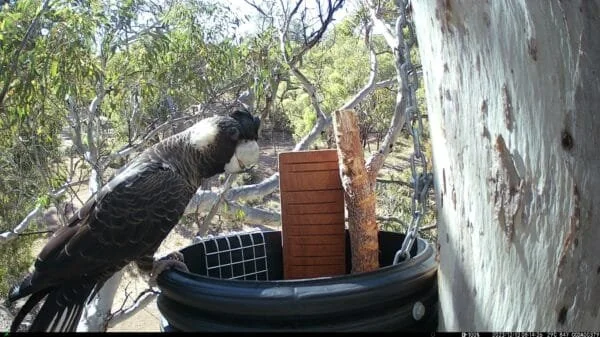
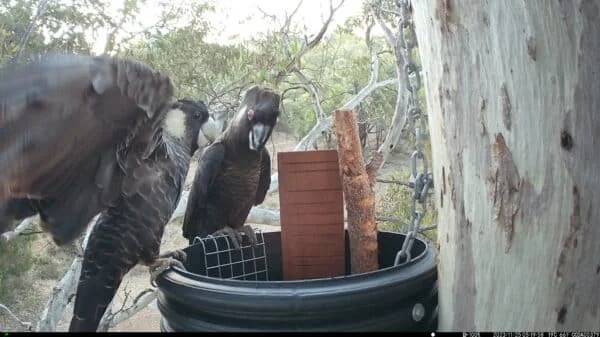
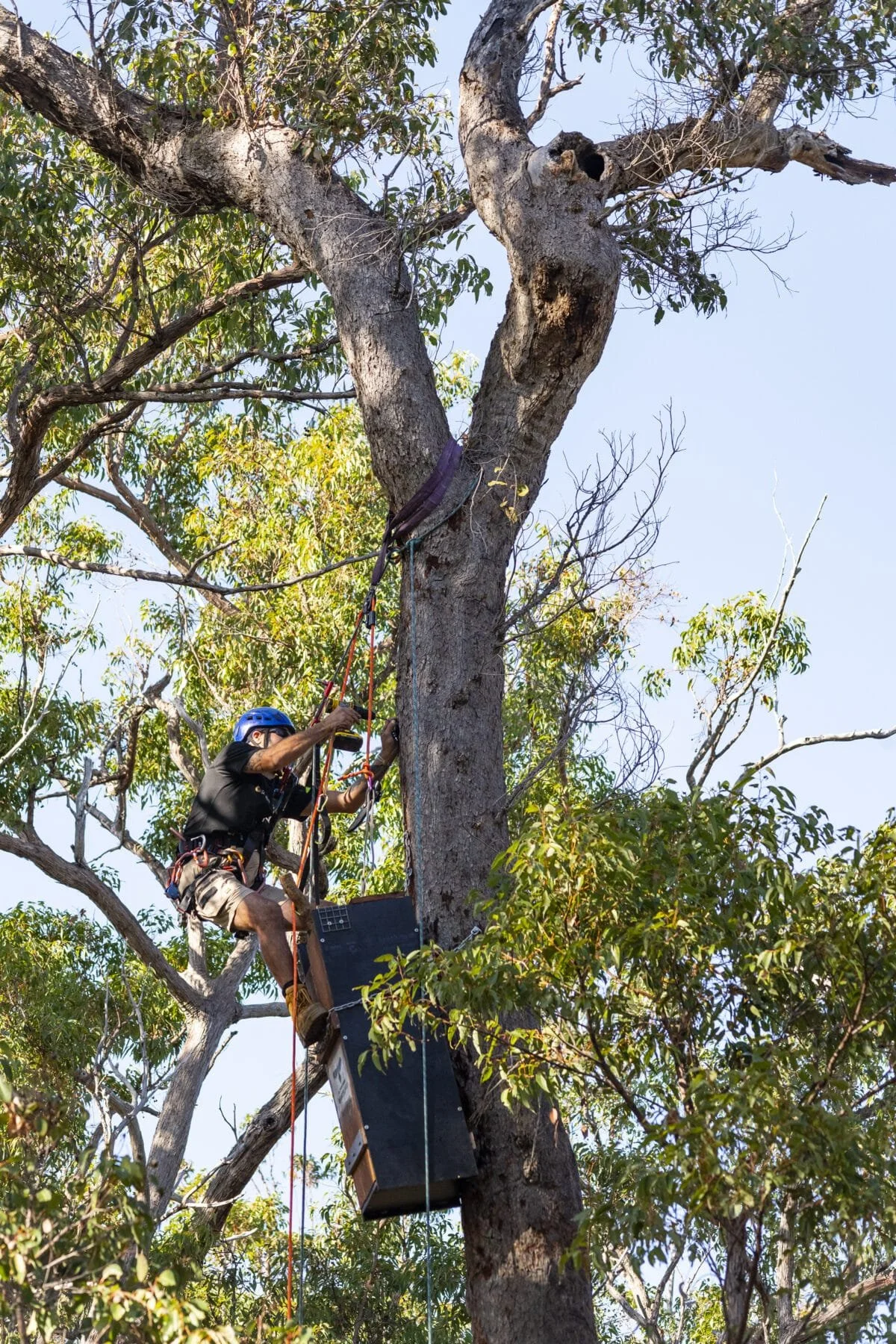
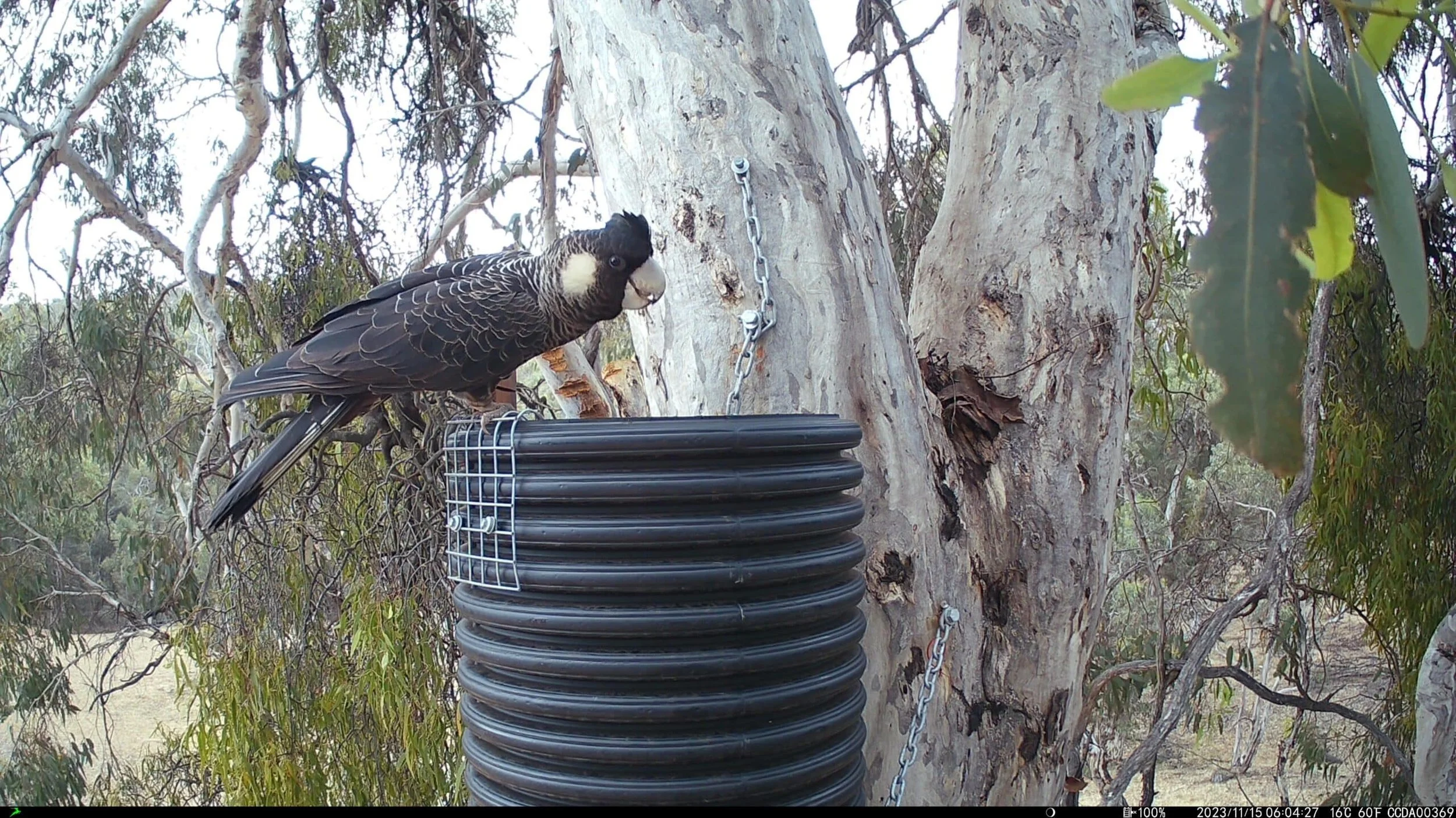
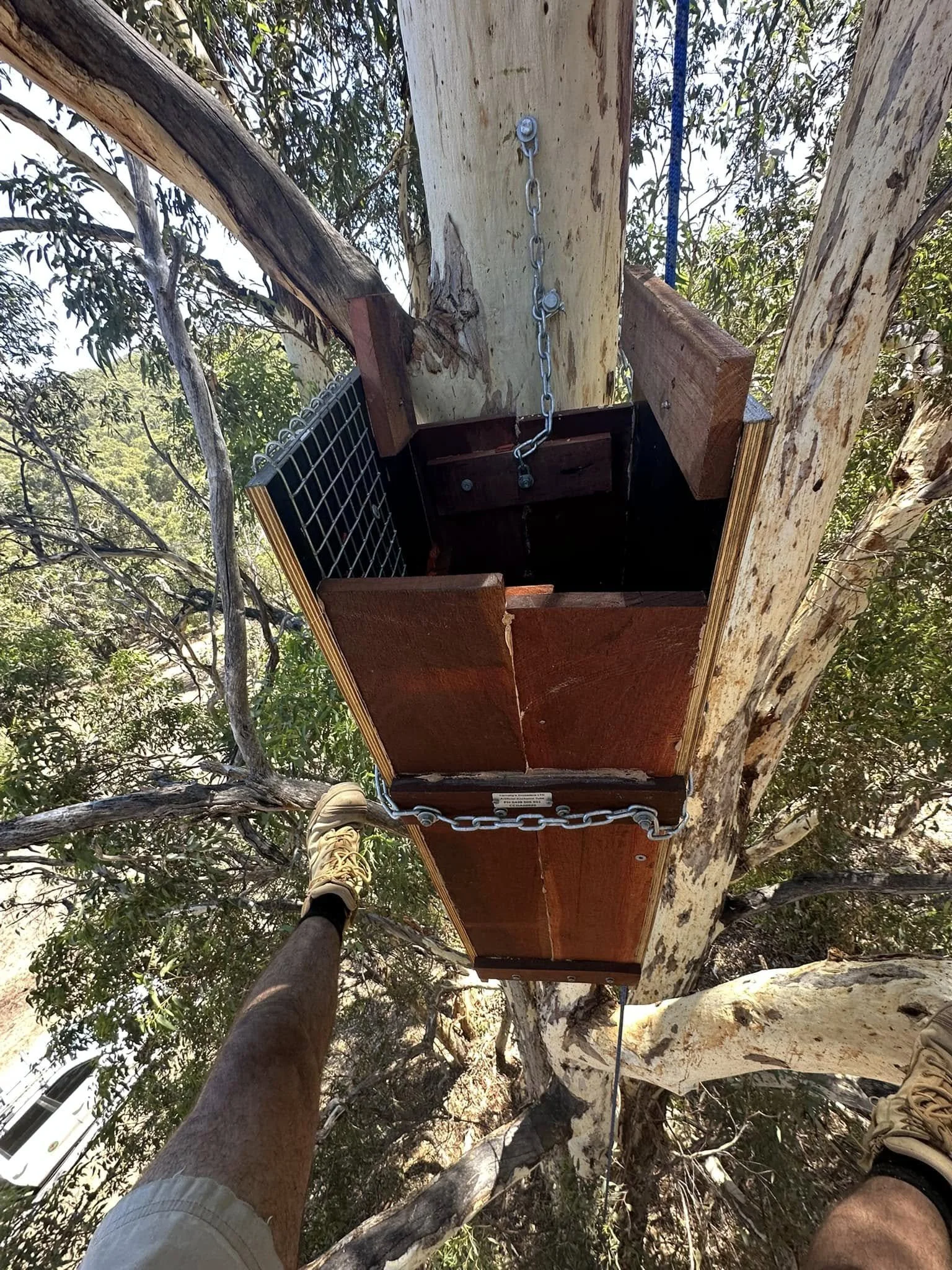
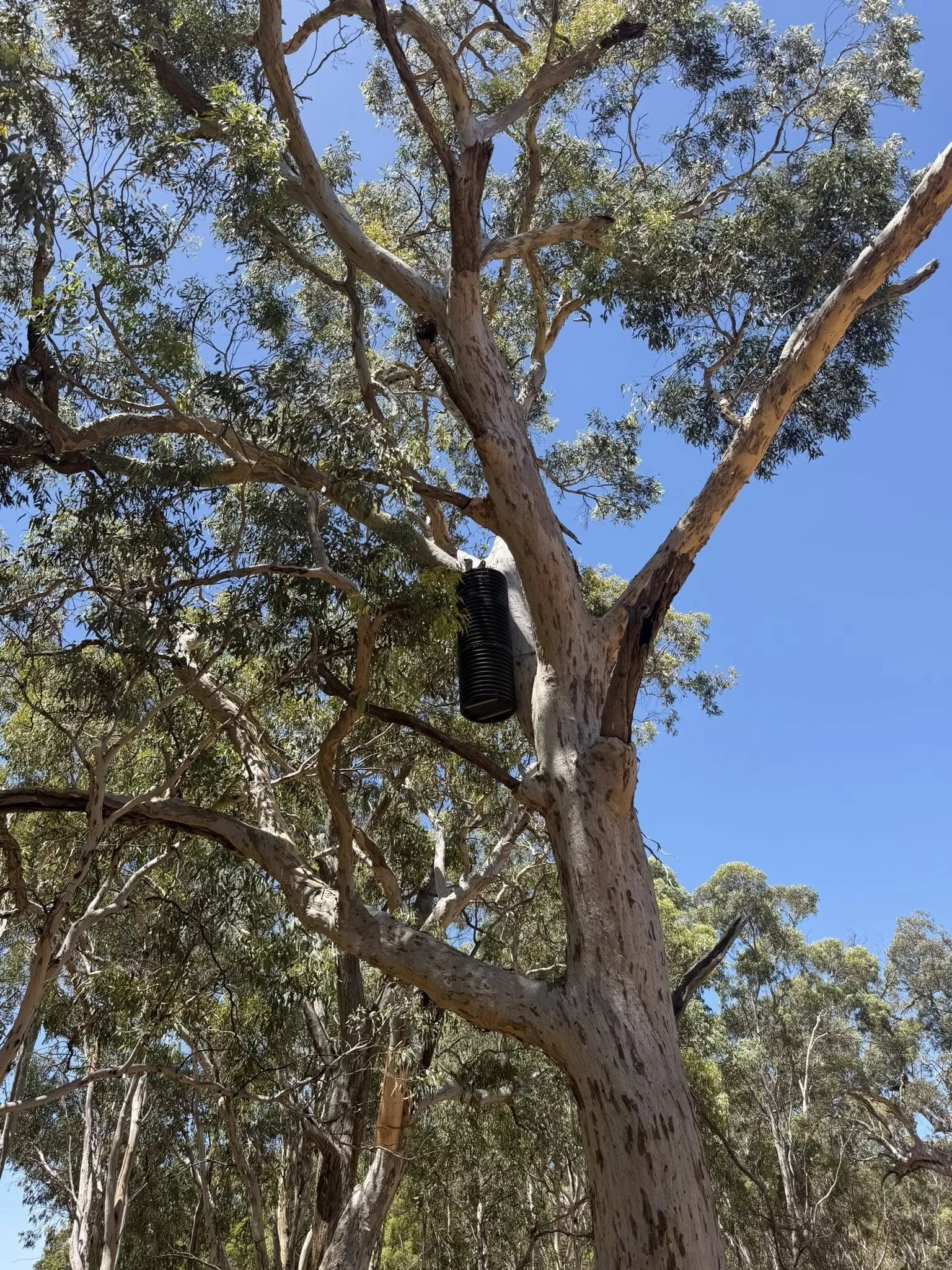
Artificial nesting hollows provide an interim breeding solution in areas where natural hollow bearing trees have been lost. These structures are designed to replicate the internal cavity of a natural eucalypt hollow while supporting the nesting requirements of Black Cockatoos.
Most natural hollows used by Black Cockatoos are upright cavities with large openings, and artificial designs replicate this structure. Black Cockatoos have evolved to tolerate exposure to weather conditions, while many competing species are less able to use these open vertical cavities.
Competition for nesting hollows remains a significant challenge. Species such as Galahs, Corellas and feral bees frequently occupy suitable hollows, often excluding Black Cockatoos from breeding sites. Artificial nesting hollows can reduce this competition by providing cavities specifically suited to Black Cockatoo nesting behaviour.
While artificial hollows can assist in supporting breeding activity, they do not replace the ecological value of mature woodland systems and natural hollow bearing trees. Long term recovery of Black Cockatoo populations ultimately depends on the protection and restoration of habitat across the landscape.
Carnaby’s Crusaders installs a range of artificial hollow designs suited to different environments and site conditions. All sites are carefully assessed prior to installation to ensure they align with habitat suitability and species behaviour.
If you are interested in hosting an artificial hollow on your property, please review the FAQ section and submit an Expression of Interest through our contact form.
Carnaby’s Crusaders works in collaboration with Aboriginal organisations and community members to support land management practices developed over thousands of years. These partnerships inform how we approach habitat protection and care for Country.
Did you know?
Natural hollows large enough for Black Cockatoos can take 150 to 200 years to form.
Carnaby’s Black Cockatoos may travel up to 50 kilometres a day between feeding and nesting sites.
The loss of mature hollow bearing trees remains one of the greatest barriers to successful breeding.
Expression of Interest
Frequently Asked Questions
-
No. While the Perth metropolitan area forms part of the Swan Coastal Plain and supports an urban population of Black Cockatoos, these species do not historically breed on the Perth Coastal Plain. During breeding season, they move into the hills and surrounding forested areas where suitable natural breeding habitat occurs.
Vehicle strike remains one of the leading causes of mortality for Black Cockatoos in Western Australia. Encouraging breeding activity within highly urbanised environments may increase the risk of additional trauma.
For this reason, artificial nesting hollows are not installed within the Perth metropolitan area.
-
Site suitability is determined by nature. If you have Black Cockatoo activity during the breeding season (June to December), suitable habitat and food resources, and are located away from busy roads and highways, we are happy to conduct an initial online assessment.
If your site is considered suitable, installation of an Artificial Cockatoo Tube on your property is still not a guarantee of breeding success.
-
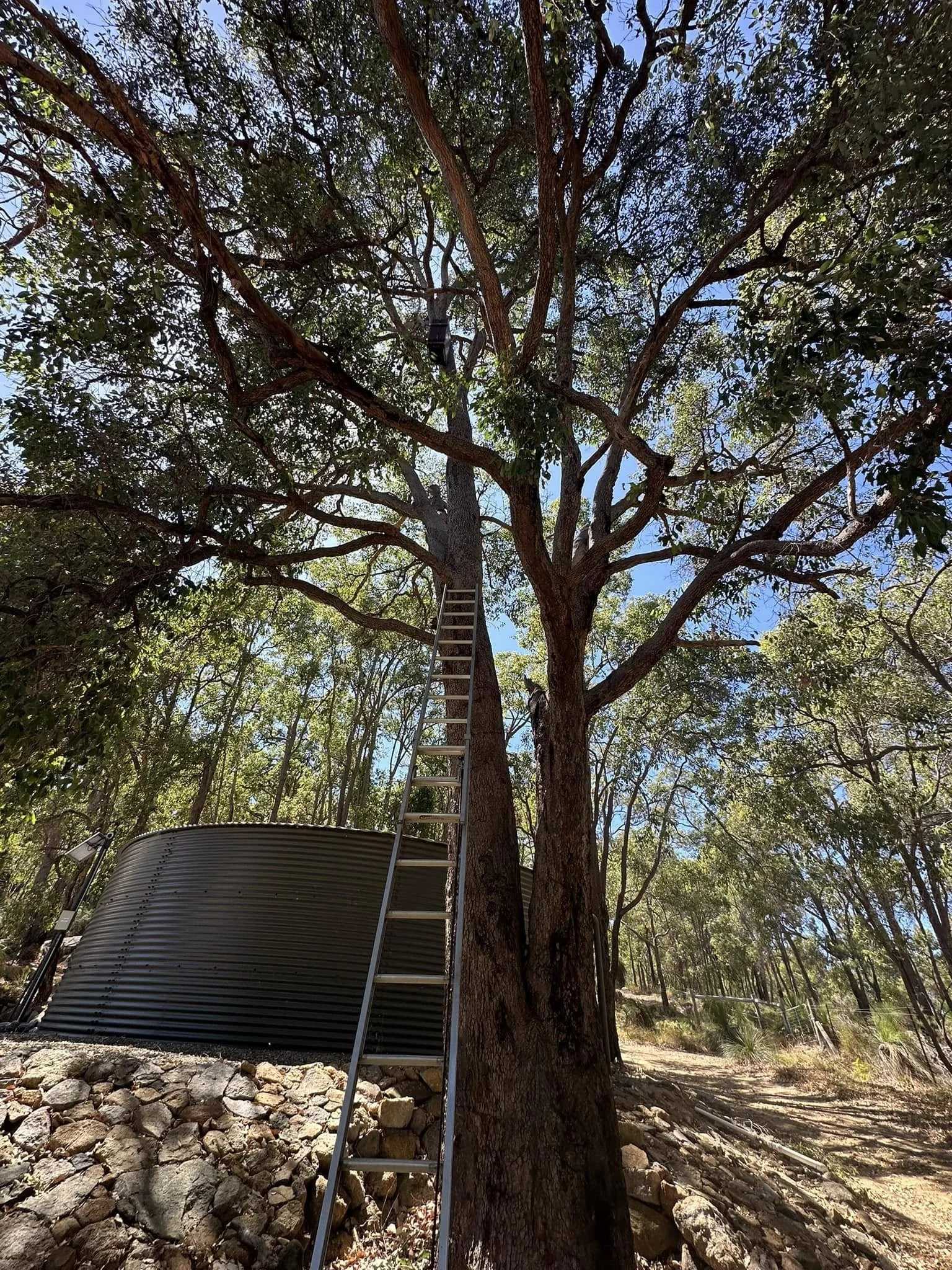
With the variety of designs now available, Artificial Cockatoo Tubes can be installed at a range of heights and in different tree species and locations.
Ideally, a tree should be large enough to accommodate an installation height of approximately 5 to 8 metres. However, each site is assessed individually, as different designs require different parameters depending on the surrounding environment and target species.
If you have Black Cockatoo activity on your property or in your area during the breeding season, it may be possible to attract interest from breeding pairs.
In some cases, we may recommend a pole mounted installation, which removes the requirement for a substantial host tree. Pole mounted options can also reduce the risk from feral and ground based predators.
-
A reliable, consistent water source is one of the most effective ways to encourage Black Cockatoo activity.
Black Cockatoos are generally cautious when feeding and drinking at ground level, as they are vulnerable to predators. They use a sentry system when drinking and feeding, with one bird remaining on lookout while the rest of the flock drinks. The sentry raises the alarm if a threat is detected.
Providing a water source such as a stock trough positioned along a fence line or a large bird bath in an open clearing can be attractive to Black Cockatoos and other native birdlife.
-
Pricing generally ranges between $450 and $600 including GST per tube, installed in most cases. This typically covers all styles and standard installation requirements.
We offer reduced rates for larger scale private projects and reserve the right to adjust pricing depending on individual site conditions, travel requirements and project complexity.
Contact us
We welcome enquiries from landholders, partners, supporters and community members interested in protecting and restoring critical habitat for Western Australia’s Black Cockatoos. Complete the form below and we’ll respond as soon as possible.