
Species and Breeding
The Three Black Cockatoo Species of South-West Western Australia
A guide to their biology, breeding, habitat and conservation.
Carnaby’s Cockatoo
Zanda latirostris
Other names:
Carnaby’s Black Cockatoo and Short-billed Black Cockatoo.
Named in honour of Ornithologist and naturalist Ivan Carnaby (1908– 1974).
Threatened Status:
“Listed Endangered: Schedule 1 – Western Australian Wildlife Conservation Act”.
“Endangered: under Federal Environmental Protection and Biodiversity Conservation Act”.
It is uncommon to common in wetter parts of range, scarce and patchily distributed in driest parts of range. Usually in pairs or small flocks, occasionally large flocks or aggregations up to 5,000 in nonbreeding season especially at pine plantations. It has declined in the last 50 years due to habitat loss and destruction especially largescale clearing in much of the wheatbelt and Banksia and Tuart woodlands on the Swan Coastal Plain.
Description:
Length 53–58 cm. Weight 500–790 g.
Upper bill broader and shorter than Baudin’s Cockatoo.
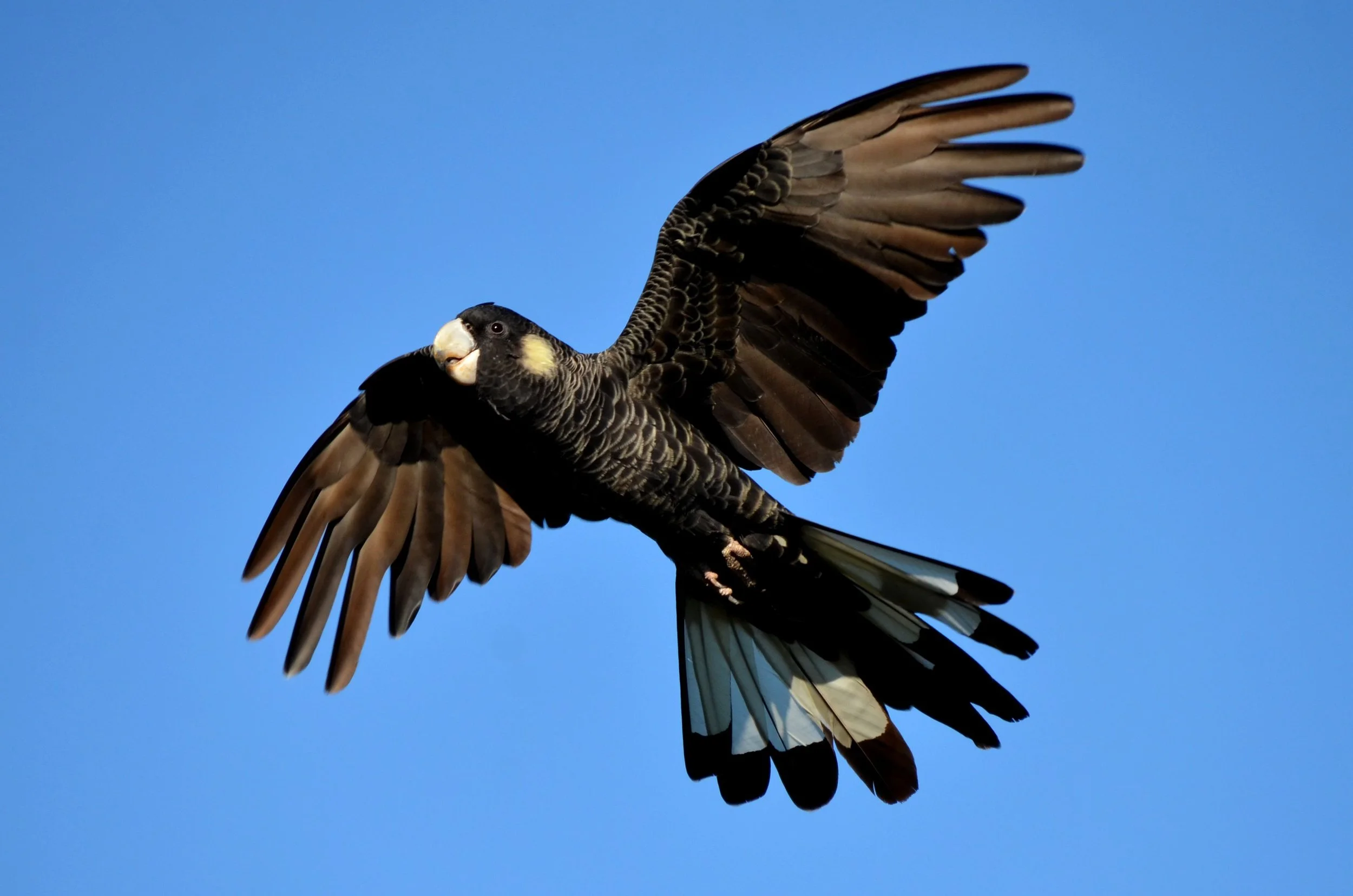
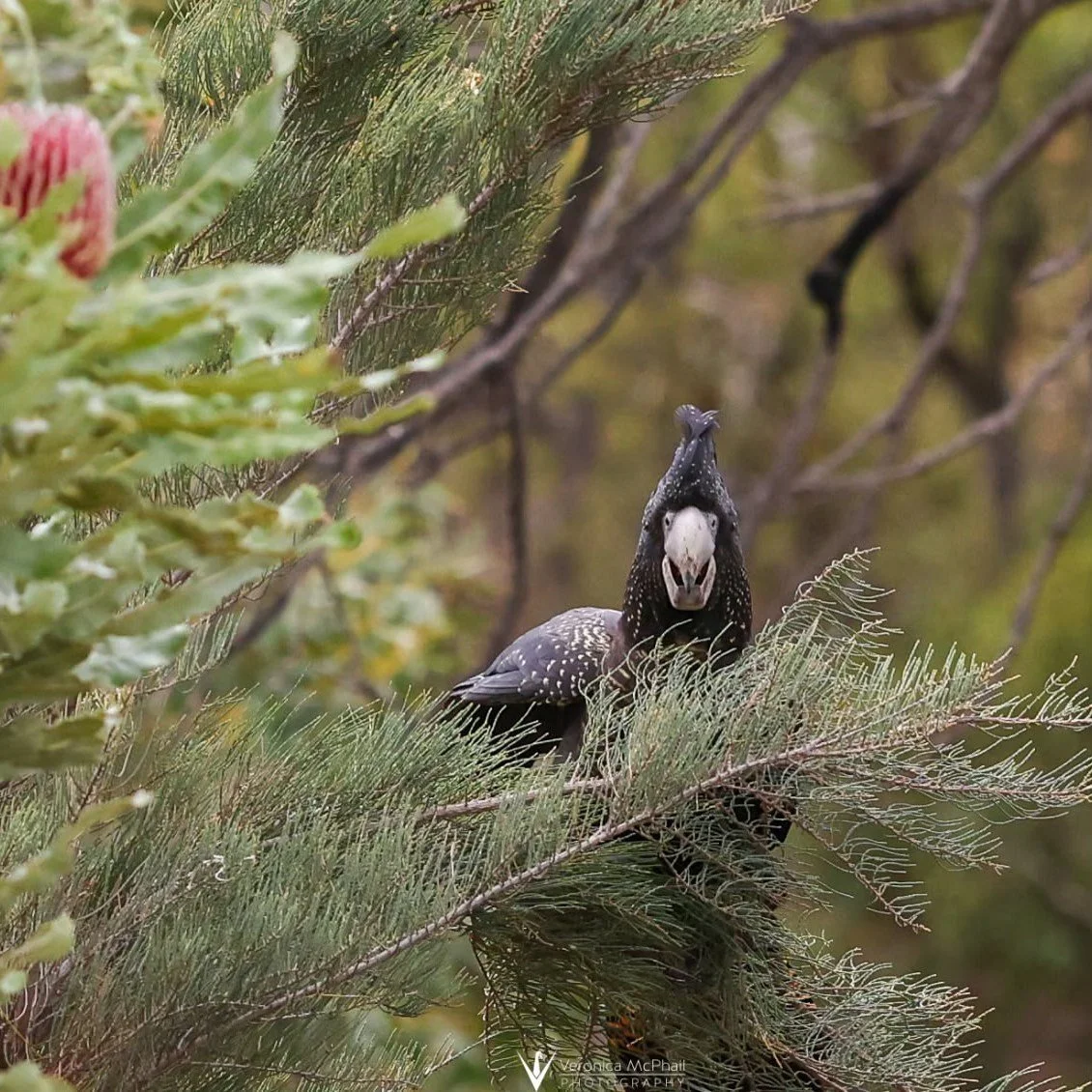
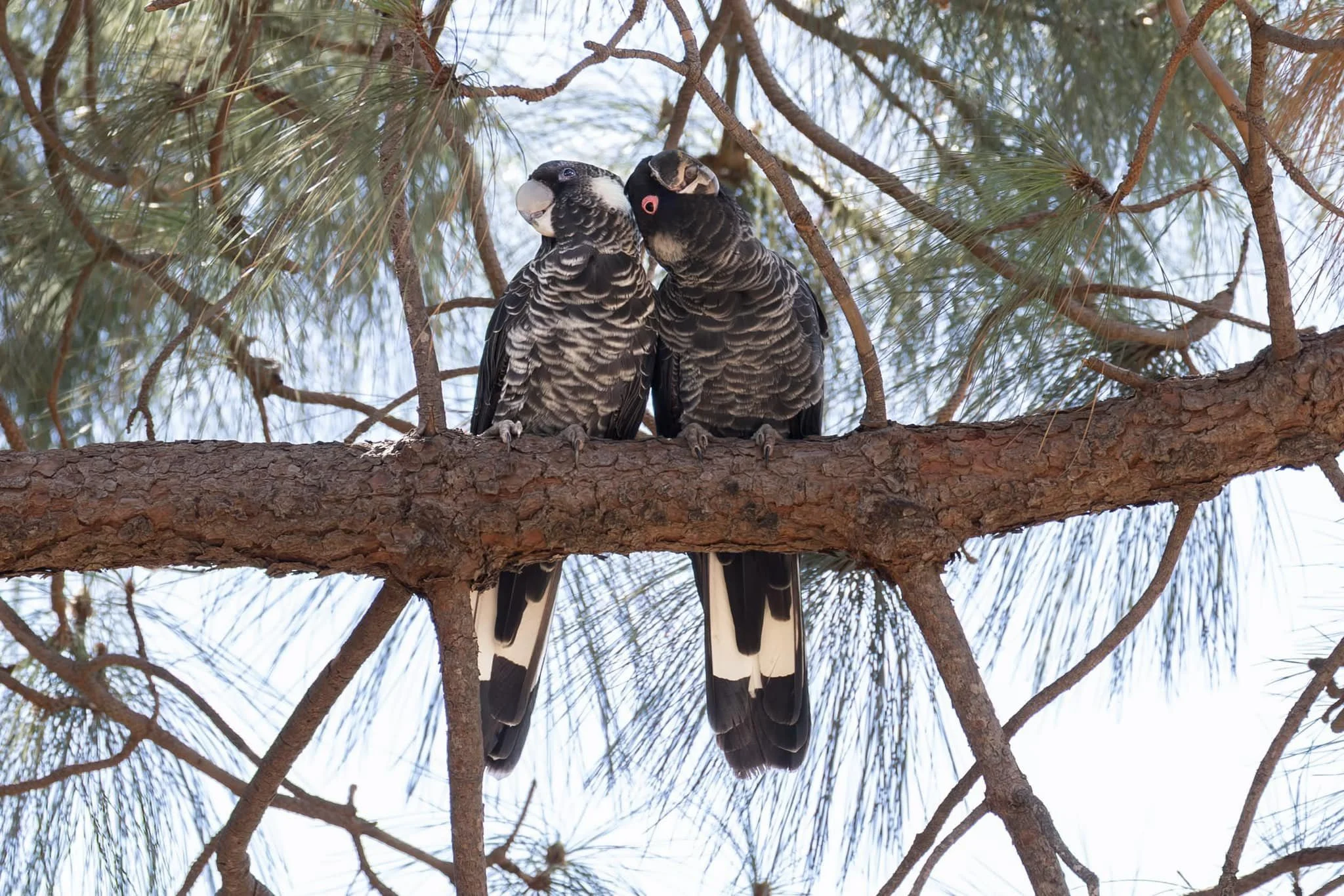
Adult male: mostly brownish black, the feathers tipped with dusky white giving a scalloped appearance; ear coverts dusky white; white band towards tip of tail, broken in middle; bill black; bare skin around eye pink.
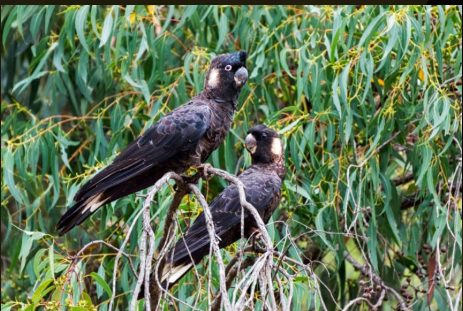
Female: like male but differs in having the ear coverts yellowish white; bill greyish white or grey with a black tip and eye skin grey.
Call:
A short “weeyou-weeyou” or “weeeloo-weeeloo” flock call.
Breeding:
Mainly in wheatbelt, in hollows of old smooth-barked eucalypts including Salmon Gum and Wandoo. Also Tuart, Flooded Gum and Karri as well as Bullich and Marri. Eggs laid on wood dust or chips at bottom of hollow from early July to December. Clutch 1–2 (usually only one young reared) and only the female incubates and broods the chick.
Life span: 25–50 years.
Distribution:
Occurs in south-west north to lower Murchison and east to Nabawa, Wilroy, Waddi Forest, Manmanning, Durokoppin, Lake Cronin and just east of Condingup. It is endemic to Western Australia.
Habitat and food:
Woodlands and scrubs of semiarid interior of Western Australia, in non-breeding season
wandering in flocks to coastal areas, especially pine plantations and Banksia woodlands. Food includes the flowers, nectar and seeds of Banksia, Dryandra, Hakea, Eucalyptus, Corymbia, Grevillea, also seeds of Pinus, fruiting nut trees especially almonds and macadamias, the flesh and juice of apples and persimmons and insect larvae.
Threats to the species:
Direct causes of population decline include land clearing and fragmentation of habitat (especially in wheatbelt), the loss of hollowbearing trees and impact of hollow competitors including Galah, corellas and feral European honey bee, also fires and vehicle strikes.
References:
Johnstone, R.E. and Storr, G.M. (1998). Handbook of Western Australian Birds. Volume 1 – Non-passerines (Emu to Dollarbird). Western Australian Museum pp. 276–280.
Johnstone, R., Kirkby, T., Stone, P., Minton, C. (2005). White-tailed Black-Cockatoos: Identification Challenges and Changes in Distribution and Status, and links with a Community Program – Cockatoo Care. In Gole, C. (Ed.). Carnaby’s Black-Cockatoo Future Directions Symposium 2003. Birds Australia WA, Perth.
Baudin’s Cockatoo
Zanda baudinii
Other names:
Baudin’s Black Cockatoo and Long-billed Black Cockatoo.
Named in honour of French explorer Nicolas Baudin (1754–1803).
Threatened Status:
“Listed Endangered: Schedule 1 – Western Australian Wildlife Conservation Act”.
“Endangered: under Federal Environmental Protection and Biodiversity Conservation Act”.
Scarce to moderately common (most numerous in deep southwest). Mainly in flocks (up to 300), occasionally larger aggregations (up to 1200) at roosts. It has declined in the last 50 years, its low rate of reproduction (0.6 chick per year) precluding it from replacing the large numbers shot by orchardists.
Description:
Length 50–60 cm. Weight 560–770 g.
Upper bill narrower and longer than Carnaby’s Cockatoo.
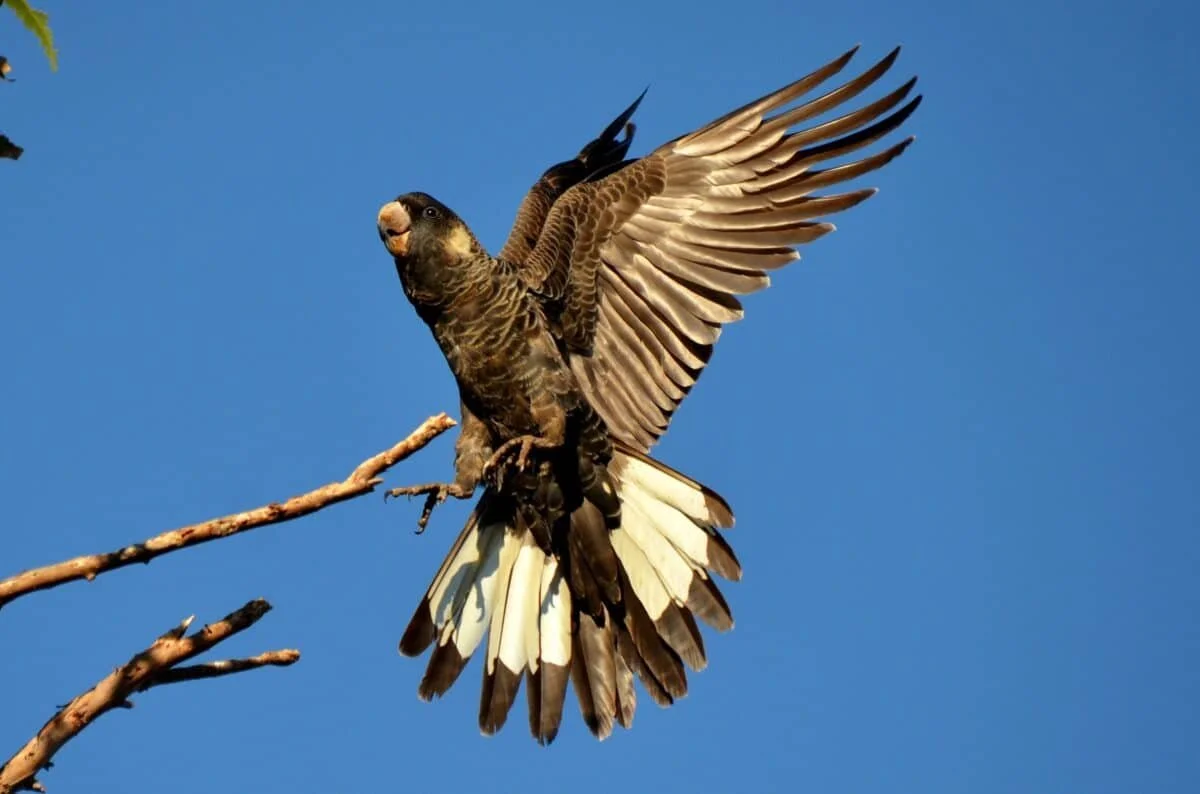
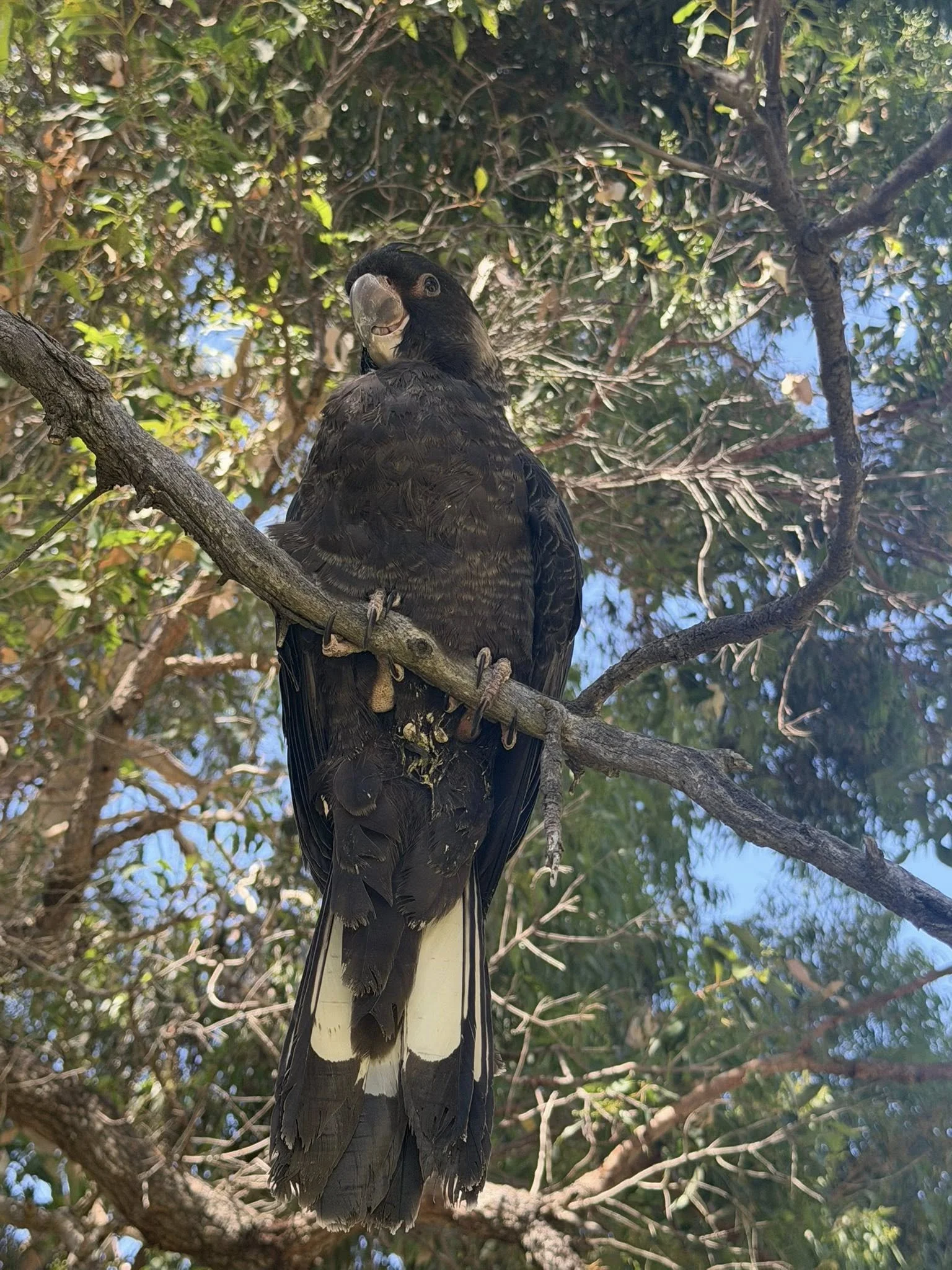
Adult male: mostly brownish black, the feathers edged with dusky white giving a scalloped appearance; ear coverts dusky white; white band towards tip of tail, broken in middle; bill black; bare skin around eye pink.
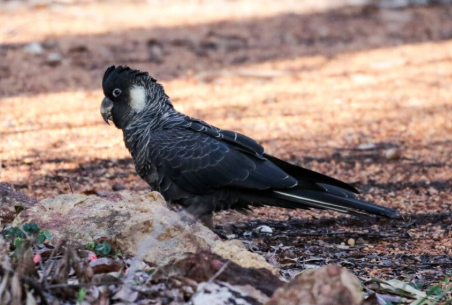
Female: like male but differs in having the ear coverts a brighter yellowish white; bill greyish with dark tip and eye skin grey.
Call:
A short “whicher whicher” and “bunyip bunyip” flock call. Breeding call a repeated low “arr” followed by a high-pitched whistle.
Breeding:
Nesting in hollows of Karri, Marri, Wandoo, Tuart and Bullich trees. Eggs laid in August-December; clutch 1–2 (only one young reared) and only the female incubates and broods the chick.
Life span: 25–50 years.
Distribution:
Occurs in south-western humid and subhumid zones, north to Gidgegannup, east to Clackline, Wandering, Quindanning, the Perup River, Lake Muir and King River, and west to eastern strip of Swan Coastal Plain including West Midland, Gosnells, Byford, North Dandalup, Yarloop, Wokalup and Bunbury also the Stirling and Porongurup Ranges and along the south coast to Waychinicup National Park. It is endemic to Western Australia.
Habitat and food:
Southern eucalypt forests of mainly Jarrah, Marri and Karri. Feeds on seeds of eucalypts, Banksia, Hakea and fruiting apples and pears. Also nectar, buds and flowers and strips bark from dead trees in search of beetle larvae. Forages at all levels from canopy to ground.
Threats to the species:
Clearing of forests, fires, vehicle strikes and feral European honey bees which take over nesting hollows. In the past large numbers were shot by orchardists; illegal shooting is still occurring.
References:
Johnstone, R.E. and Storr, G.M. (1998). Handbook of Western Australian Birds. Volume 1 – Non-passerines (Emu to Dollarbird). Western Australian Museum pp. 278–280.
Johnstone, R.E. and Kirkby, T. (2008). Distribution, status, social organisation, movements and conservation of Baudin’s Cockatoo (Calyptorhynchus baudinii) in South-west Western Australia. Records of the Western Australian Museum 25: 107–118.
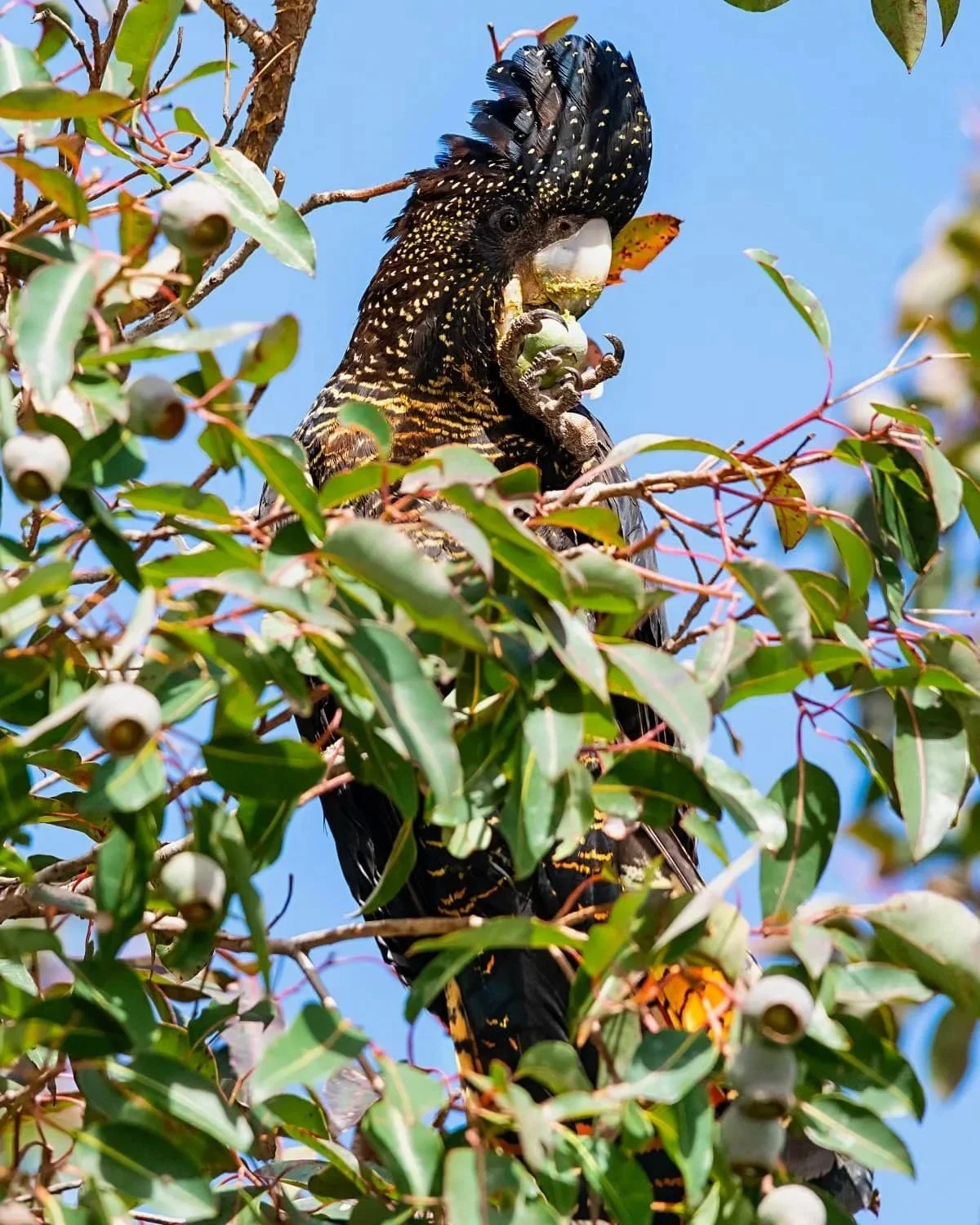
Forest Red-tailed Black Cockatoo
Calyptorhynchus banksii naso
Calyptorhynchus banksii naso
Other names:
Red-tailed Black Cockatoo.
The south-western population naso (referring to its large bill) was named by John Gould in 1837. Known to the Noongar people as
‘Karrak’.
Threatened Status:
“Listed Vulnerable: Schedule 1 – Western Australian Wildlife
Conservation Act”.
“Vulnerable: under Federal Environmental Protection and
Biodiversity Conservation Act”.
It was formerly common, but is now rare to uncommon and patchily distributed over a range which has become markedly reduced. Usually in pairs or small flocks, seldom large flocks (up to 200). It has declined due to destruction of forests and woodlands, also competition for nest hollows with native and exotic species and the impact of fire. There are three subspecies of Red-tailed Black Cockatoo in Western Australia (see map). Only the south-western population naso is listed as Vulnerable.
Description:
Length 53–55 cm. Weight 600–610 g.
Adult male: glossy black except for bright orange-red band towards tip of tail, bill dark grey or blackish.
Female: glossy black, the head and wing coverts spotted with pale yellow; breast and belly barred
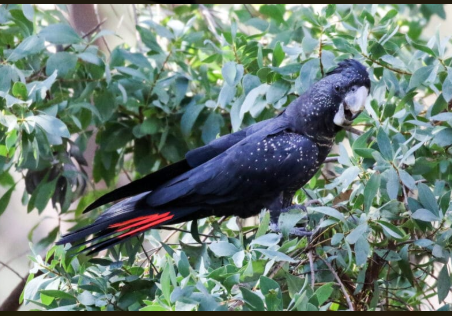
with orange-yellow; tail narrowly banded with orange-yellow (more orange) on undertail coverts; bill pale greyish white.
Juvenile and immature: similar to female except for less pale yellow spots on head, cheeks and wings, dull pale yellow bars on breast and belly, outer tail feathers brightly barred with red or orange red (little or no yellow) and bill dark grey or blackish.
Call:
Loud harsh cries “Karee”, “Karrak” or “Krar-raak” also “chet” sounds and harsh nasal wheezing. Male breeding call is a repeated
mechanical “waa-waa”.
Breeding:
Nesting in hollows of Marri, Jarrah, Wandoo, Karri and Bullich trees. Eggs laid on wood chips at the bottom of the hollow in March– December; clutch 1 (rarely 2). Incubation period 29–31 days and only the female incubates and broods the chick. Hatchlings covered in sparse yellow down.
Life span: 25–50 years.
Distribution:
This subspecies occurs in the humid and subhumid south-west; mainly in hilly interior, north to Gingin (formerly to Dandaragan) and east to Mt Helena (formerly to Toodyay), Christmas Tree Well, near Brookton, North Bannister (formerly to Wandering),
Mt Saddleback, Kojonup, Rocky Gully, upper King River and east to the Green Range. It is endemic to Western Australia.
Habitat and food: Eucalypt forests. Feeds on seeding Marri, Jarrah, Blackbutt, Karri, Sheoak and Snottygobble, also some ornamental eucalypts and
introduced Cape Lilac.
Threats to the species: Destruction of forests, fires in spring breeding season, feral European honeybees, the expansion of Australian Shelduck and Australian Wood Duck which takes over nest hollows, also vehicle strikes.
References:
Johnstone, R.E. and Storr, G.M. (1998) Handbook of Western Australian Birds. Volume 1 – Non-passerines (Emu to Dollarbird). Western Australian Museum pp. 278–280.
Johnstone, R.E. and Kirkby, T. (1999) Food of the Forest Red-tailed Black Cockatoo Calyptorhynchus banksii naso in south-west Western Australia West Aust. Nat. 22(3): 167–177
Images: Tony Kirkby Layout design: Kim Sarti
Contact us
We welcome enquiries from landholders, partners, supporters and community members interested in protecting and restoring critical habitat for Western Australia’s Black Cockatoos. Complete the form below and we’ll respond as soon as possible.